
Sole Searching: How to find the right exercise shoes for you!
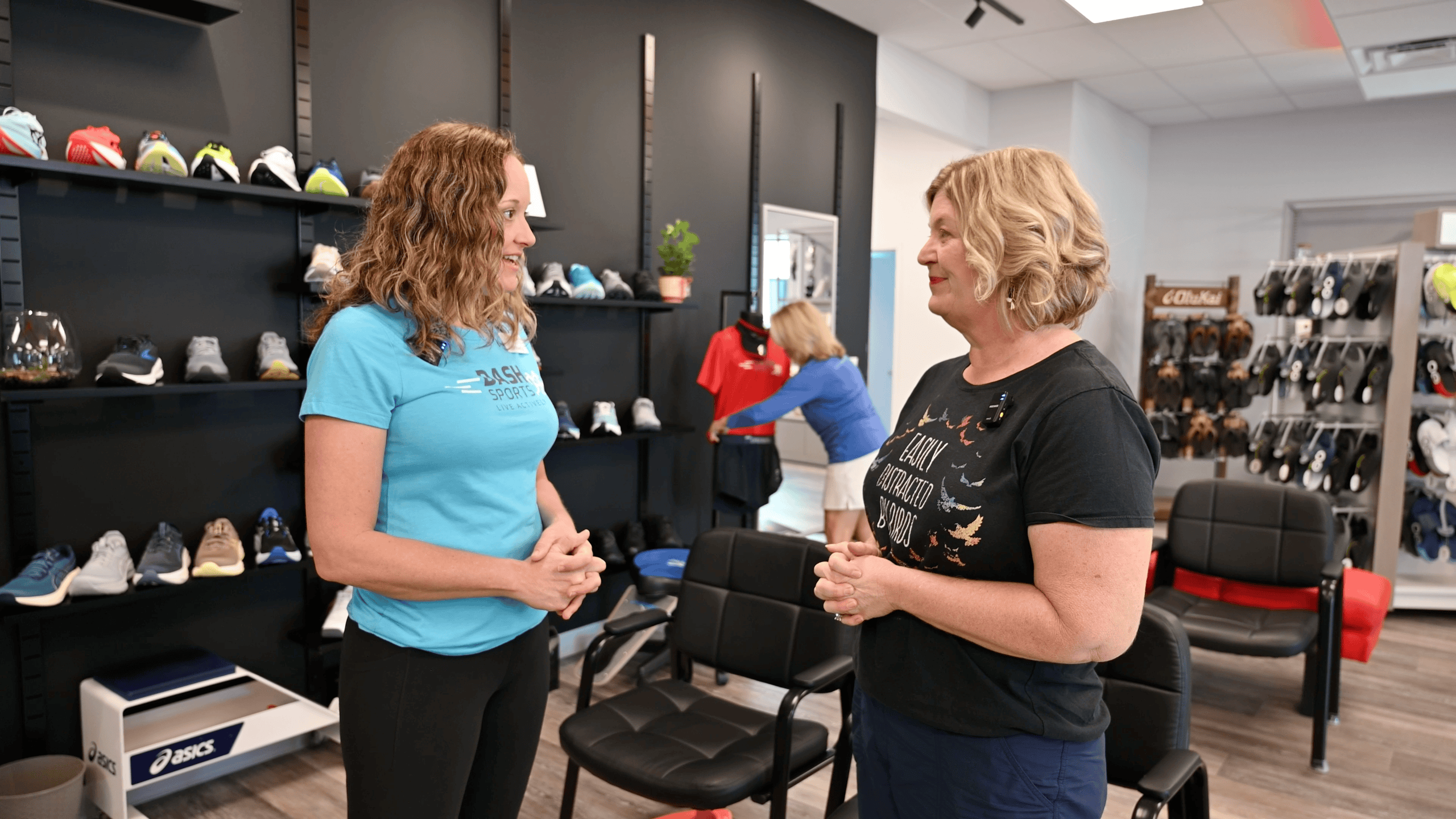
Let’s find your “solemate”! We took a trip over to DASH Sports Winter Garden to find the right shoe for our team member, Krista. She found the perfect match, and you can too! Watch as she gets a custom fitting by DASH Sports owner Kimberly Grogan. Keep reading below for a step by step guide to shoe shopping.
How should exercise shoes fit?
Finding the right fit for your exercise or running shoes is crucial for comfort, performance, and injury prevention.
A proper fit goes beyond just length—it involves how the shoe holds your foot in three key areas: length, width, and depth (volume).
Here is a breakdown of how a good exercise shoe should fit:
1. Length (The Toe Box)
Rule of Thumb: You should have about a thumb’s width (or half-inch) of space between the longest toe (which may not be the big toe) and the end of the shoe.
Why it Matters: When you run or walk, your feet swell and lengthen slightly. This extra space prevents your toes from jamming against the front of the shoe, which can cause blisters, bruising (black toenails), and pain. The shoes are also created so that when you have space at the end, the widest point of your foot is in the right place and so is the arch.
Feel: Your toes should be able to wiggle freely and naturally.
2. Width (The Forefoot)
The Snug Test: The shoe should feel snug around the widest part of your foot (the ball of your foot), but not tight or pinched. You should be able to pinch a small amount of upper material between your thumb and forefinger on the side of the shoe.
Why it Matters: Your foot should not spill over the sides of the shoe, nor should it slide side-to-side. The shoe’s base should match the width of your foot. You might need a wide shoe.
3. Heel and Midfoot
Heel Lock: Your heel should feel secure and stable in the heel cup with minimal slipping. Some slight movement is normal, but excessive lifting means the shoe is too loose.
Midfoot: Once the laces are tied comfortably, the shoe should hug your midfoot without any painful pressure points. The lacing system should allow you to adjust the fit exactly to the shape of your arch and instep.
4. General Comfort and Feel
Immediate Comfort: The shoe should feel great the moment you put it on. Unlike dress shoes, exercise shoes do not require a “break-in” period. If it’s uncomfortable in the store, it will be uncomfortable on the run.
Try Both: Always try on both shoes, as most people have one foot that is slightly larger than the other. Always fit to the larger foot.
When to Shop: Try on shoes in the afternoon or evening or right after a workout, as your feet are naturally at their largest size then. Getting a complimentary custom shoe fitting from experts (like those at Dash Sports!) is the best way to ensure all these elements are perfect for your unique gait and foot shape.
What kind of shoes should I get if I have to stand all day?
If you spend all day standing, the shoes you choose are arguably more important than almost any other piece of gear you own. They need to prioritize long-term support, stability, and comfort over features like high cushioning or energy return found in typical running shoes. When you stand for hours, your foot doesn’t move much, but it bears your full weight continuously, which fatigues muscles and compresses joints.
Essential Features for All-Day Standing
Firm Arch Support: This is the most critical feature. The shoe must support the arch structure to prevent the foot from collapsing (pronation) and reducing strain on the plantar fascia, knees, and back. Look for shoes with built-in orthotic support. A Wide, Stable Base: The shoe needs a broad, solid base under the forefoot and heel to provide maximum stability and prevent wobbling. The sole should not be overly soft or squishy (like some maximal cushioned running shoes).
Adequate Cushioning (but not too soft): You need cushioning to absorb impact, but it should be firm enough not to compress completely after a few hours. Memory foam or responsive yet stable foam is excellent.
Proper Fit (Length and Width): Feet swell throughout the day. Your shoe needs enough room in the toe box for your toes to wiggle and sufficient width to accommodate swelling without pinching.
Non-Slip Outsole: Important for safety in many work environments.
How much space should there be between my toes and the end of the shoe?
The general rule for the correct space between your toes and the end of your exercise or walking shoe is approximately a 1/2 thumb’s width (about a half-inch) when you are weight bearing in the shoe.
What should I do to test the shoes when I try them on at the store?
Here is a 5-step checklist for testing shoes in the store to ensure you find your perfect fit:
1. Wear the Right Socks
Always try shoes on with the type of non-cotton performance socks you plan to wear while running or walking. Socks add bulk and friction, and using the wrong ones can completely change the fit and feel of the shoe.
2. The Thumb Check & Wiggle Test
Length: Stand up and check for a ½ thumb’s width of space (about half an inch) between your longest toe and the end of the shoe.
Wiggle: Ensure you can easily wiggle and splay your toes inside the toe box. The shoe should not feel tight or pinched across the widest part of your foot.
3. The Lace-Up and Walk Test
Lace Properly: Tie the laces securely, but not so tight that they cause painful pressure points.
Walk Around: Walk around the store for a full minute. Pay attention to any slipping in the heel, rubbing spots, or general discomfort. The shoe should feel comfortable immediately.
4. The Activity Test
This is the most crucial step. Use the space in the store (or our fitting area) to perform the movements you’ll be doing outside:
For Runners: Jog a few strides, ideally on a short treadmill or the store floor. See how the cushioning feels under impact and whether your heel stays locked down.
For Walkers: Take long, brisk strides to feel the heel-to-toe transition and the flexibility of the forefoot.
For Cross-Training: Do a few lunges, squats, and quick side-to-side steps to test the lateral stability of the shoe.
5. Check the Final Feel
After your movement test, take note of the following:
Arch Support: Does the arch support hit your foot in the right place, or does it feel intrusive or non-existent?
Pressure Points: Do you feel any tight spots, rubbing, or seams pressing against your foot? (Remember, shoes should not require a “break-in” period.)
Overall Balance: Does the shoe feel stable and balanced, or do you feel like you’re wobbling?
What if one foot is slightly bigger than the other? Is this common?
The short answer is yes, it is extremely common for one foot to be slightly larger than the other. In fact, most people have a measurable difference between their left and right foot size. Always fit the shoe to the largest or longest foot.
Are new exercise shoes supposed to feel tight at first?
The short answer is no, new exercise shoes are generally not supposed to feel tight at first. A properly fitted running, walking, or cross-training shoe should feel comfortable immediately and provide adequate room in key areas.
How do I know if the shoe’s arch support is right for me?
Because arch needs are so individual, the most reliable method is to get a complimentary custom shoe fitting at a specialty store, like Dash Sports. Our experts can visually analyze your gait and use our scanning technology to recommend shoes with the arch support and stability features that will keep your feet aligned and pain-free.
What’s the best way to break in new shoes without getting blisters?
First and foremost, the shoe should not feel tight when you buy it. If it feels tight, it’s the wrong size or width, and no “break-in” period will fix that without causing blisters. Wear them indoors for a few days and always wear a pair of non-cotton performance socks.
What if I have plantar fasciitis, shin splints, or knee pain—what should I look for?
When dealing with Plantar Fasciitis, Shin Splints, or Knee Pain, your shoe choice should focus on two main things: stability and shock absorption. Here is what you should look for, based on the specific condition:
Footwear Solutions for Common Ailments
1. Plantar Fasciitis
This is pain in the thick band of tissue (fascia) running across the bottom of your foot, usually near the heel.
Look For:
Excellent Arch Support: This is the most crucial element. You need a shoe with a firm, well-defined arch to prevent the fascia from stretching and tearing with every step.
Rigid Midfoot: The shoe should not easily twist in the middle. Less flexibility in the midfoot means less strain on the fascia.
Heel Cushioning: Adequate, firm cushioning in the heel to absorb shock when you land.
Shoe Types: Often found in shoes with strong stability features or those specifically designed for maximal cushioning with a firm base.
2. Shin Splints (Medial Tibial Stress Syndrome) This pain along the inner edge of the shinbone is often caused by repetitive stress, tightness in muscles, and improper biomechanics (often rolling of the foot or inadequate shock absorption).
Look For:
Excellent Shock Absorption: You need a shoe that significantly reduces the impact traveling up your leg. Highly
cushioned midsoles are beneficial.
Stability/Motion Control: If your foot rolls inward excessively (overpronation), you need a stability shoe (like the Brooks Adrenaline) to control that motion. This helps your muscles and tendons absorb force more efficiently, reducing strain on the shin bone.
Shoe Types: Stability shoes or modern maximal cushion neutral shoes (if you do not overpronate) work well.
3. Knee Pain (Runner’s Knee, Patellofemoral Pain) Knee pain is complex, but it is often linked to poor alignment and excessive impact coming from the foot.
Look For:
Controlled Motion: This is key. Whether you need a neutral or stability shoe depends on your unique gait. If your knee pain is linked to your foot rolling too far inward (the most common cause), a stability shoe will help align your leg from the ground up.
Heel-to-Toe Drop: Sometimes, varying the drop (the height difference between the heel and forefoot) can shift stress away from the knee. A slightly higher drop can sometimes be helpful for easing knee pressure.
Cushioning: Adequate, responsive cushioning is essential to
reduce the overall impact load on the knee joint.
Shoe Types: Stability or Cushioning shoes, based on a professional gait analysis. Why a Fitting is Crucial – Because all three of these conditions are related to your specific foot structure and how you move, guessing is not an option. The absolute best thing you can do is come into Dash Sports for a complimentary custom shoe fitting. Our experts can:
1. Analyze Your Gait: We can watch how your foot strikes and rolls to determine if you need motion control (stability) or neutral cushioning.
2. Measure your feet
3. Recommend the Right Category: We can then guide you to specific models known to help manage these common injuries. Are expensive brands really better? A shoe is only “better” if it is the right shoe for your unique foot and gait. A $160 shoe that works perfectly for your foot mechanics is an excellent value. A $40 shoe that causes you pain or injury is a waste of money. The most expensive shoe from a top brand is not necessarily the best choice if it doesn’t match your arch height or gait pattern. That’s why we recommend starting with a custom shoe fitting. We have seasonal sales which is a great time to pick up a pair of shoes. Some brands are up to 30% off. Be sure to follow us on Facebook and Instagram to be alerted to our sales. How long do exercise shoes usually last, and how do I know when it’s time to replace my shoes? The lifespan of an exercise shoe is generally measured in miles rather than months, as wear depends entirely on how often you use them and the type of activity. Reliable indicators: sudden aches and pains or foot fatigue. Both may be signs it’s time for a new pair.
NEVER put your running/exercise shoes in the washing machine or dryer. The harsh detergents, agitation, and heat can break down the
adhesives, cushioning foams, and engineered materials.
The Best Way to Clean:
1. Remove Insoles and Laces: Wash these separately by hand with mild soap.
2. Brush Off Dirt: Use a dry, soft brush (like an old toothbrush) to remove loose dirt and debris from the upper and outsole.
3. Spot Clean: Use a mixture of mild soap (like dish soap) and warm water. Gently scrub the mesh and midsole with a cloth or soft brush.
4. Rinse: Wipe the shoe down with a cloth dipped in clean water. Do not submerge the shoe.
5. Air Dry (Crucial!): Stuff the shoes with newspaper or paper towels to absorb moisture and help maintain their shape. Let them air dry completely at room temperature, away from direct sunlight or heaters.
Custom Shoe Fitting: At Dash Sports, we believe the right fit is the foundation of an active, pain-free lifestyle. That’s why we offer a complimentary custom shoe fitting—a personalized process designed to match you with the perfect footwear for your unique needs.
What to Expect During Your Fitting:
1. Conversation First: We start by listening! We discuss your goals (running, walking, standing all day), your activity level, any current discomfort, and your injury history (like Plantar Fasciitis or shin splints).
2. Gait Analysis: Our experts will observe your feet in motion, typically by watching you walk or jog briefly. This analysis helps us determine your biomechanics and whether you need a neutral shoe for cushioning or a stability shoe for motion control.
3. Expert Recommendation & Try-On: Based on all the data, we select shoes from our top brands (HOKA, Brooks, On, Saucony, etc.) that have the specific features—like arch support and cushioning—you need.
4. The Test Run: You’ll try on the recommended shoes with the right performance socks and move around the store. We teach you proper lacing techniques and ensure the shoe is comfortable immediately. By the end of the fitting, you leave with confidence, knowing you have the absolute best shoe to help you Live Actively and comfortably.

About the Author
Kimberly Grogan is a passionate advocate for helping people move better, feel stronger, and stay active for life. As the owner of Dash Sports, a 5 star specialty running and walking store known for its expert shoe fitting process, Kimberly has spent two decades working with runners, walkers, athletes, and everyday movers to reduce pain, prevent injury, and improve performance through proper footwear.
With a deep belief that no two feet—or goals—are the same, Kimberly has built a team trained to look beyond shoe size alone, focusing on gait analysis, foot mechanics, lifestyle needs, and long-term health. Her work regularly connects her with local medical professionals, coaches, and wellness providers to ensure customers receive thoughtful, whole-person care.
Kimberly is also a committed community leader, supporting local races, wellness initiatives, and educational events that encourage healthy living across Central Florida. When she’s not in the store, you’ll find her cheering on local runners, brainstorming new ways to serve her community, or enjoying time with her 2 young adult children.
Through Dash Sports and partnerships like Healthy West Orange, Kimberly continues her mission to keep people moving comfortably and confidently—one step at a time.









What a well done conversation about buying the right shoe! Thank You!